Using GenAI to Create Custom Cases, Simulations, and Course Resources
MS in Integrated Marketing, NYU SPS
The company data problem
The resource we need for an assignment often does not exist in a usable form.
- Companies cannot share sensitive data.
- Public cases may be dated or overly polished.
- Available materials rarely match our learning outcomes.
- Individual exhibits may contradict one another.
GenAI can help faculty build the company they need for the learning experience they designed.
The objective is not more content. It is better instructional conditions: relevant evidence, credible decisions, and aligned resources.
One learning need can become many types of resources
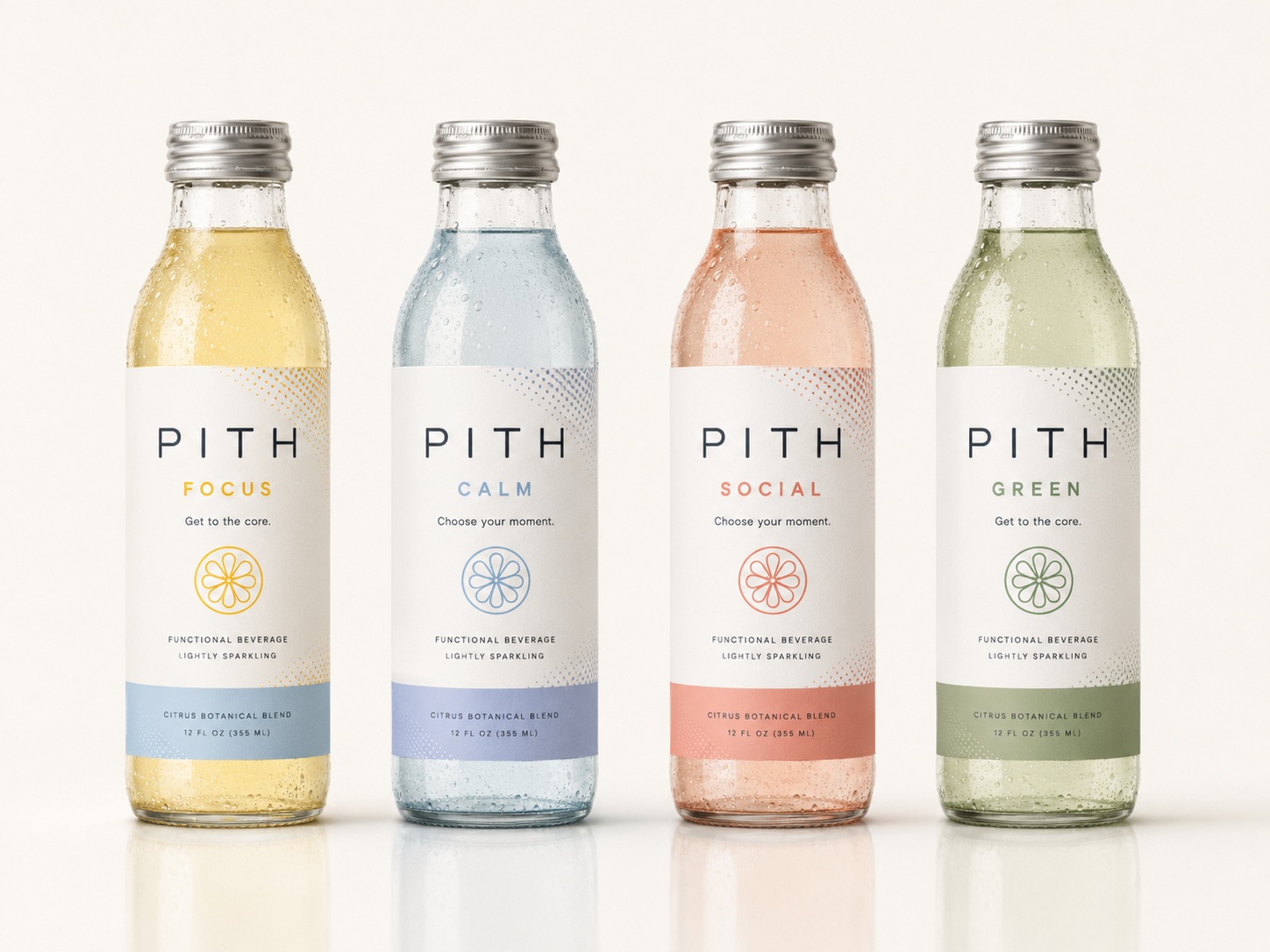
A fictional brand. A real research experience.
PITH was created for a semester-long Consumer Research Project—not as a branding exercise.
After determining the need, I followed eight connected steps
Add course context
Provide the syllabus, course description, policies, schedule, and existing assessments.
Add learning outcomes
Define what students should learn and the evidence they should produce.
Build the brand story
Define purpose, audience, voice, promise, and the organizing idea.
Build the brand case
Establish the context, problem, research questions, and decision.
Build the brand elements
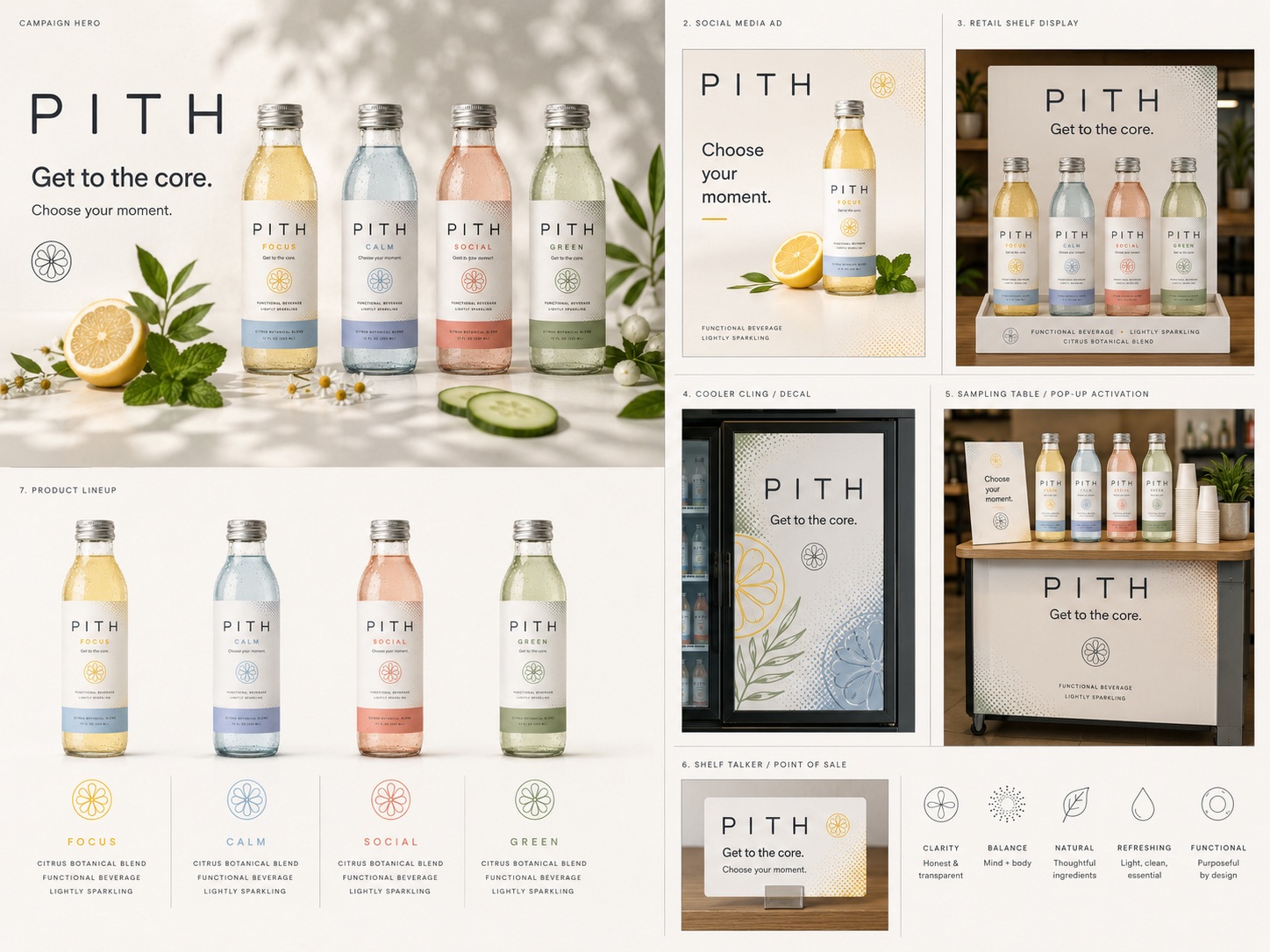
Create identity, packaging, labels, product imagery, and campaign assets.
Develop instructional materials
Create research context, project briefs, teaching resources, and stimuli.
Develop activities and rubrics
Align deliverables, milestones, research requirements, and evaluation criteria.
Iterate
Check coherence, clarify boundaries, refine the resources, and improve the experience.
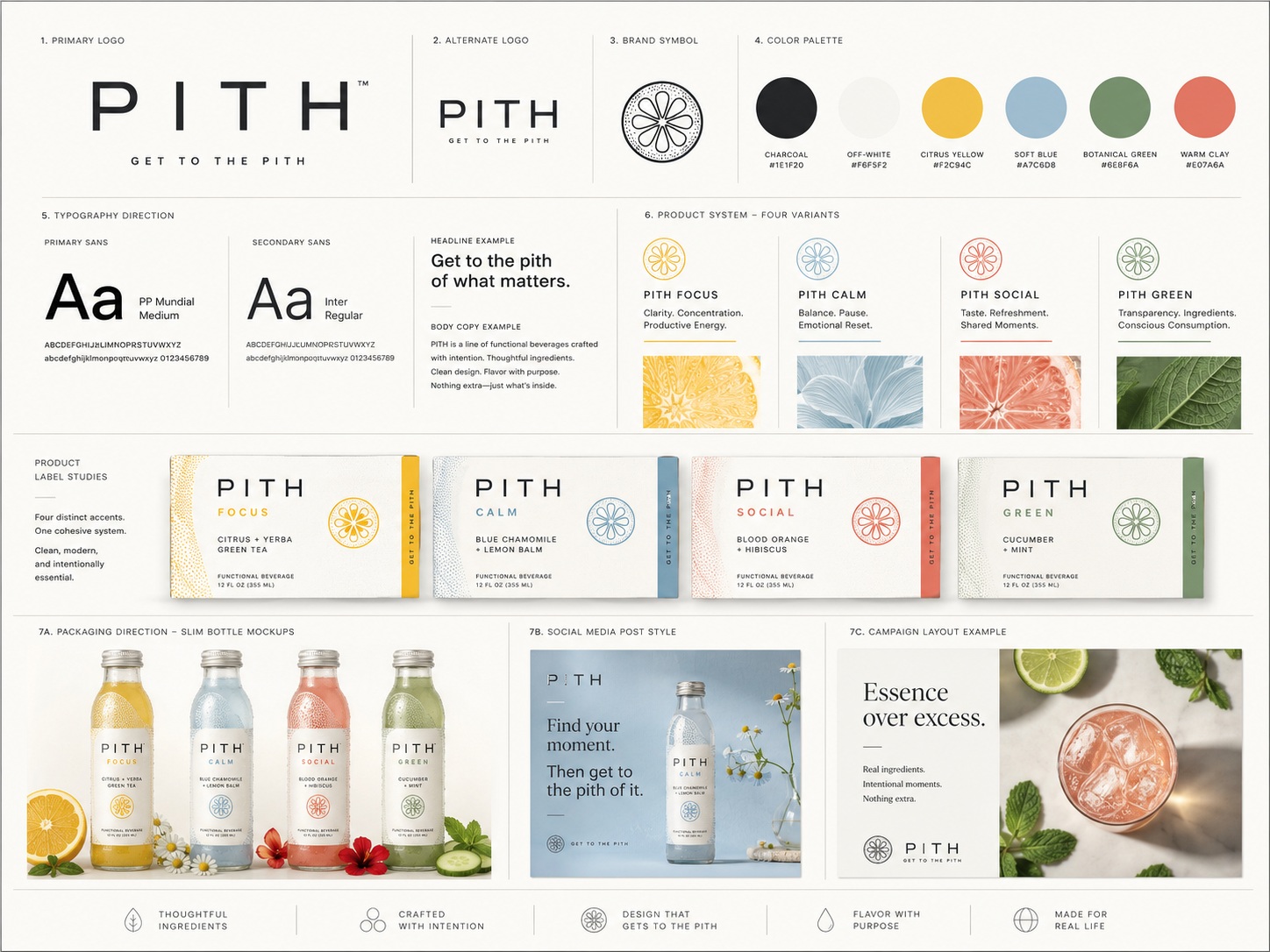
From brand guide to research stimuli
The same positioning, language, hierarchy, and visual codes carry across every student-facing resource.
Students investigate the brand—not merely admire it
- Synthesize secondary market research
- Conduct at least one focus group
- Complete semi-structured interviews
- Connect evidence to consumer-behavior theory
A credible case also defines what students cannot conclude
Students may evaluate
- Brand concept and story
- Visual identity and product architecture
- Packaging, labels, and communications
- Relevance, credibility, and perceived value
Students may not claim
- Taste or mouthfeel
- Product efficacy or health effects
- Repeat purchase
- Market demand from a qualitative sample
Four prompts reproduce the workflow
Brand Story + Case
Creates the brand foundation, unresolved student case, platform, and instructor note.
01_PITH_Brand_Story_Prompt.docxBrand Elements
Creates the identity, product system, labels, campaign assets, and student brand book.
02_PITH_Brand_Elements_Prompt.docxClass Resources
Creates Brightspace lessons, teaching slides, exercises, research tools, and stimuli.
03_PITH_Class_Resources_Prompt.docxGraded Activities
Creates the project brief, staged work, assessment map, activities, and analytic rubrics.
04_PITH_Graded_Activities_Prompt.docxFirst, give the AI the course context
- Course syllabus and description
- Course learning outcomes
- Weekly topics and sequence
- Existing assignments and rubrics
- Policies, constraints, and deadlines
You are helping me design a custom instructional case and resource set for [COURSE]. Use the attached syllabus as the authoritative source.

Extract and summarize:
1. Course purpose and learner level
2. Stated course learning outcomes
3. Relevant topics and weekly sequence
4. Existing assessments, weights, and deadlines
5. Policies and constraints that must be preserved
6. Gaps or ambiguities requiring instructor review

Do not create or change course policy. Distinguish source facts from recommendations. Before generating any materials, return a concise course-context brief and a short list of questions for me.
Then, define what the entire activity should teach
- What students will do
- The concept or skill they will apply
- The evidence they will produce
- The course outcome it supports
- How performance will be assessed
Using the approved course-context brief, propose 3–5 measurable learning outcomes for the complete case and resource activity.

Each outcome must state what students will do, the course concept or skill they will apply, and the evidence they will produce. Align every activity outcome with an existing course learning outcome.

Prioritize analysis, interpretation, decision-making, and evidence-based recommendations. Do not add outcomes the activity cannot realistically assess.

Return a table with four columns:
Activity Learning Outcome | Course Outcome | Student Evidence | Assessment Criterion

Flag every proposed outcome for instructor approval before continuing.
Generation is the beginning of the work
Does every artifact support the intended learning outcome and decision?
Do names, dates, numbers, claims, and constraints agree across materials?
Are calculations, citations, concepts, and disciplinary details defensible?
What may students infer, and what remains outside the evidence?
What is synthetic, adapted, or provided only for educational purposes?
Are the materials readable, navigable, inclusive, and appropriately challenging?
A practical four-part measurement plan
Start small
Dr. Jose Mendoza · Faculty Success Initiative
fsi.jose-mendoza.com